Review Ties Pesticide Exposure to Antimicrobial Resistance
08/23/2026 / By Coco Somers
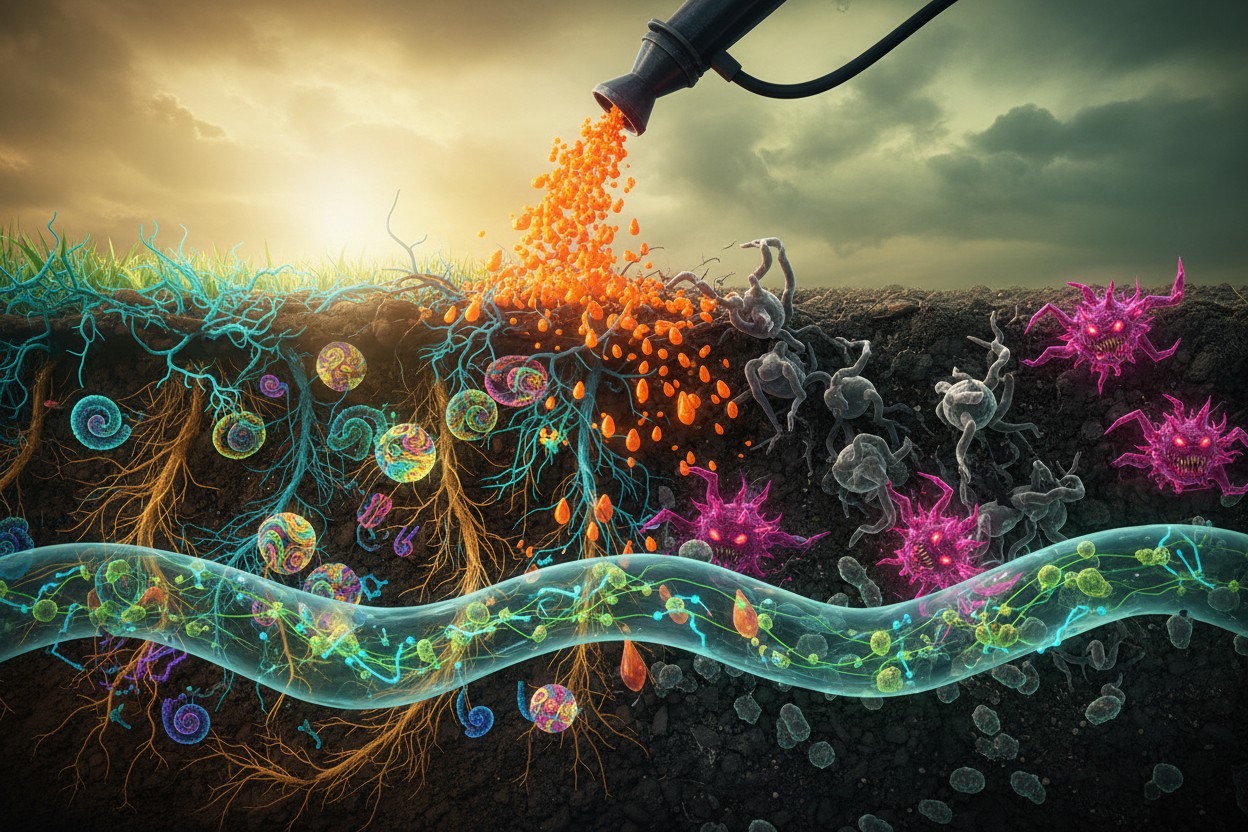
A review published in Comparative Biochemistry and Physiology Part C: Toxicology & Pharmacology finds that chronic pesticide use disrupts microbial ecosystems and promotes antimicrobial resistance (AMR) and multidrug resistance (MDR). The review by D. Leena, S. Chaudhary, and M. Mehdi was summarized Aug. 19, 2026, by Beyond Pesticides.
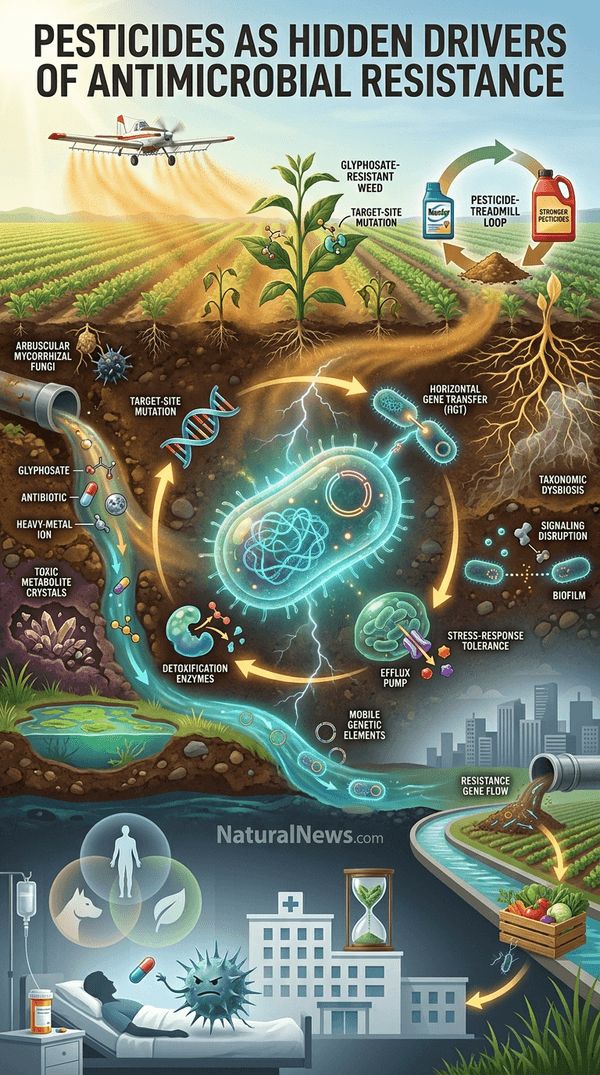
The authors wrote, “Chronic pesticide exposure promotes MDR through interconnected genetic mechanisms (mutations and horizontal gene transfer), biochemical mechanisms (detoxification enzymes), physiological adaptations (stress responses and biofilm-associated tolerance), and molecular regulatory processes (efflux pump activation and altered gene expression), resulting in cross-resistance to clinically relevant antimicrobial agents. These mechanisms alter microbial community structure, facilitate the dissemination of antibiotic resistance genes [ARGs], and impair essential ecosystem functions.”
According to the review, these mechanisms threaten environmental and public health by altering microbial community structure and facilitating the spread of antibiotic resistance genes. Two studies from South America linked the herbicide glyphosate to the proliferation of multidrug-resistant bacteria, including pathogens responsible for hospital-acquired infections, according to an April 2026 report by NaturalNews.com [1].
Background: Pesticide Resistance in Agriculture
Pesticide resistance occurs when a population of pests, including insects, weeds, and other organisms, evolves to survive a chemical that would normally be lethal, according to the review. The review cites glyphosate-resistant weed species as an example, with resistance emerging through mutations that change the herbicide’s target enzyme and make it ineffective.
The use of glyphosate and other pesticides, along with monocultural techniques common in chemical-intensive agriculture, promotes the development of resistance, according to the review. This can lead to product replacement and the use of additional pesticides as part of the “pesticide treadmill.”
Glyphosate-resistant weeds have prompted consideration of additional herbicides, according to Martha Richmond in “Cancer Hazards Parathion Malathion Diazanon Tetrachlorvinphos and Glyphosate” [2]. The review also notes that pesticides have led to the emergence of resistance in more than 700 insect species, according to a 2001 assessment by the Food and Agriculture Organization.
How Pesticides Disrupt Microbial Communities
Pesticide exposure has a substantial impact on microbial populations, fundamentally altering their natural diversity and taxonomic composition, the researchers said. “Microbes play critical functions in global ecosystems by cycling essential nutrients, decomposing organic matter, and maintaining soil and water health,” they wrote. “When pesticides enter the environment, they disrupt these delicate microbial ecosystems by directly killing sensitive, vulnerable species or creating severe selective conditions that promote the rapid emergence of resistant strains.”
Soil microbial communities, represented mainly by fungi and bacteria, can be affected by environmental conditions and anthropogenic activity, according to Vivek Kumar in “Rhizomicrobiome Dynamics in Bioremediation” [3]. The review identifies three functional disruptions from pesticide exposure: taxonomic dysbiosis, signaling disruption, and metabolic accumulation.
Taxonomic dysbiosis includes a severe reduction in critical symbiotic microbes, such as arbuscular mycorrhizal fungi required for plant macronutrient uptake, alongside an increase in opportunistic, toxicant-degrading bacteria. Signaling disruption occurs when pesticide residues mimic or block microbial quorum sensing molecules, halting cellular communication required for coordinated biofilm formation, nitrogen-fixing nodulation, and natural soil defense pathways.
Metabolic accumulation refers to the buildup of toxic, partially degraded chemical metabolites because inhibition of sensitive secondary-degrader microbes lowers soil quality and exerts secondary toxicity on the surrounding rhizosphere. Pesticide use has also been shown to change fresh algal biocenoses and promote water blooming, according to Mikhail Y. Syromyatnikov and colleagues in “The Effect of Pesticides on the Microbiome of Animals” [4].
The review notes that organisms are typically exposed to pesticide mixtures rather than isolated chemicals, and simultaneous exposure can induce oxidative stress, activate cellular stress-response pathways, and enhance horizontal gene transfer. According to the review, the herbicides glyphosate, dicamba, and 2,4-D can alter bacterial susceptibility to clinically important antibiotics.
Glyphosate is also able to influence microbial metabolism, induce oxidative stress, and activate multidrug efflux pumps. A recent study found that glyphosate disrupts the gut microbiome and may have generational effects, according to NaturalNews.com [5].
Horizontal Gene Transfer and Public Health Concerns
Horizontal gene transfer, defined as the movement of genetic material between organisms not through inheritance, contributes to the spread of antimicrobial resistance and multidrug resistance, according to the review. By accelerating the spread of antibiotic resistance genes, pesticide-contaminated environments become reservoirs of antibiotic-resistant bacteria and increase the likelihood of resistance gene transfer to humans.
The researchers said agricultural systems irrigated with wastewater containing both pesticide residues and antibiotics increase the risk of transferring resistance genes from environmental microorganisms to clinical pathogens. The presence of pesticides, antibiotics, resistant bacteria, and other contaminants in wastewater threatens human health, particularly when biosolids derived from municipal sewage sludge are used as fertilizer.
Antimicrobial resistance contributes to an estimated 1.1 million to 1.4 million deaths worldwide each year, according to public health data cited by NaturalNews.com [6]. Antimicrobial resistance has been declared one of the top 10 global public health threats to humanity, according to Children’s Health Defense [7]. Research from the University of Buenos Aires, published in Frontiers in Microbiology, found that environmental bacterial strains resistant to glyphosate are closely related to multidrug-resistant nosocomial pathogens, according to NaturalNews.com [8].
A study from Yangzhou University in the Journal of Agricultural and Food Chemistry identified pesticides as a core factor in the spread of antibiotic resistance genes in agricultural environments, according to the Beyond Pesticides summary. Separately, research reported by Dr. Mercola has characterized pesticides and other agricultural chemicals as neurotoxins that can disrupt neurological system and brain function [9].
Organic Transition Reported as Response
Beyond Pesticides, which summarized the review, recommends transitioning to organic farming and land management practices to reduce reliance on petrochemical pesticides and synthetic fertilizers. According to the organization, organic practices support soil health, protect the health of all organisms, and mitigate the promotion of resistance in the environment.
The organization also cites research showing that organic meat is less likely to be contaminated with multidrug-resistant bacteria. Conventional meats were about 34% more likely to be contaminated with drug-resistant pathogenic bacteria than meat produced according to organic standards, according to a study published in Environmental Health Perspectives and cited by Children’s Health Defense [10]. All unattributed positions and opinions in the summary are those of Beyond Pesticides.
References
- Coco Somers. “Studies Link Glyphosate Herbicide to Antimicrobial Resistance in Clinical Pathogens”. NaturalNews.com. April 22, 2026.
- Martha Richmond. “Cancer Hazards Parathion Malathion Diazanon Tetrachlorvinphos and Glyphosate”.
- Vivek Kumar. “Rhizomicrobiome Dynamics in Bioremediation”.
- Mikhail Y Syromyatnikov, Mariya M Isuwa, Olga V Savinkova, Mariya I Derevshchikova. “The Effect of Pesticides on the Microbiome of Animals”.
- NaturalNews.com. “Study: Glyphosate Disrupts Gut Microbiome, May Have Generational Effects”. June 22, 2026.
- NaturalNews.com. “Study Links Glyphosate to Selection of Antibiotic-Resistant Superbugs”. June 24, 2026.
- Children’s Health Defense. “The Next Pandemic Is Here — Antimicrobial Resistance”.
- NaturalNews.com. “Studies Link Glyphosate Herbicide to Antimicrobial Resistance in Clinical Pathogens”. April 22, 2026.
- Dr. Mercola. “How to Find the Healthiest Fare in Meat and Produce Aisles”. Mercola.com. May 8, 2013.
- Children’s Health Defense. “Factory Farm Meat Far More Contaminated With Pathogenic Bacteria Than Organic Meats”.
Explainer Infographic
Submit a correction >>
Tagged Under:
agriculture, AMR, antibiotic resistance, Argentina, autoimmune, Censored Science, chemicals, dangerous, environ, food collapse, food supply, glyphosate, gut health, health science, herbicide, infections, multidrug-resistant bacteria, natural health, One health approach, outbreak, pathogens, research, scientific, superbugs, toxins
This article may contain statements that reflect the opinion of the author
RECENT NEWS & ARTICLES